Hans Haacke: Information Flow
This exhibition is the first major retrospective in Asia devoted to Hans Haacke (b. 1936, Cologne, Germany), a pioneering figure whose practice transformed contemporary art into a critical investigation of the systems and relationships that shape society. Haacke played a key role in the development of Conceptual art in New York during the 1960s, bringing environmental processes, political power, economic interests, and cultural institutions into the field of art, and revealing the mechanisms through which they interact. His work has had a profound influence on subsequent developments in contemporary art.
Spanning more than six decades, the exhibition offers a comprehensive overview of Haacke’s practice, from his early explorations of natural phenomena and living systems to his incisive investigations of political and economic power and art institutions, establishing him as a seminal figure in the development of institutional critique. In an increasingly interconnected and information-driven society, Haacke’s practice has taken on ever greater urgency. Bringing these works together, the exhibition underscores the continuing relevance of Haacke's examination of power, and his use of art to expose and challenge its operations.
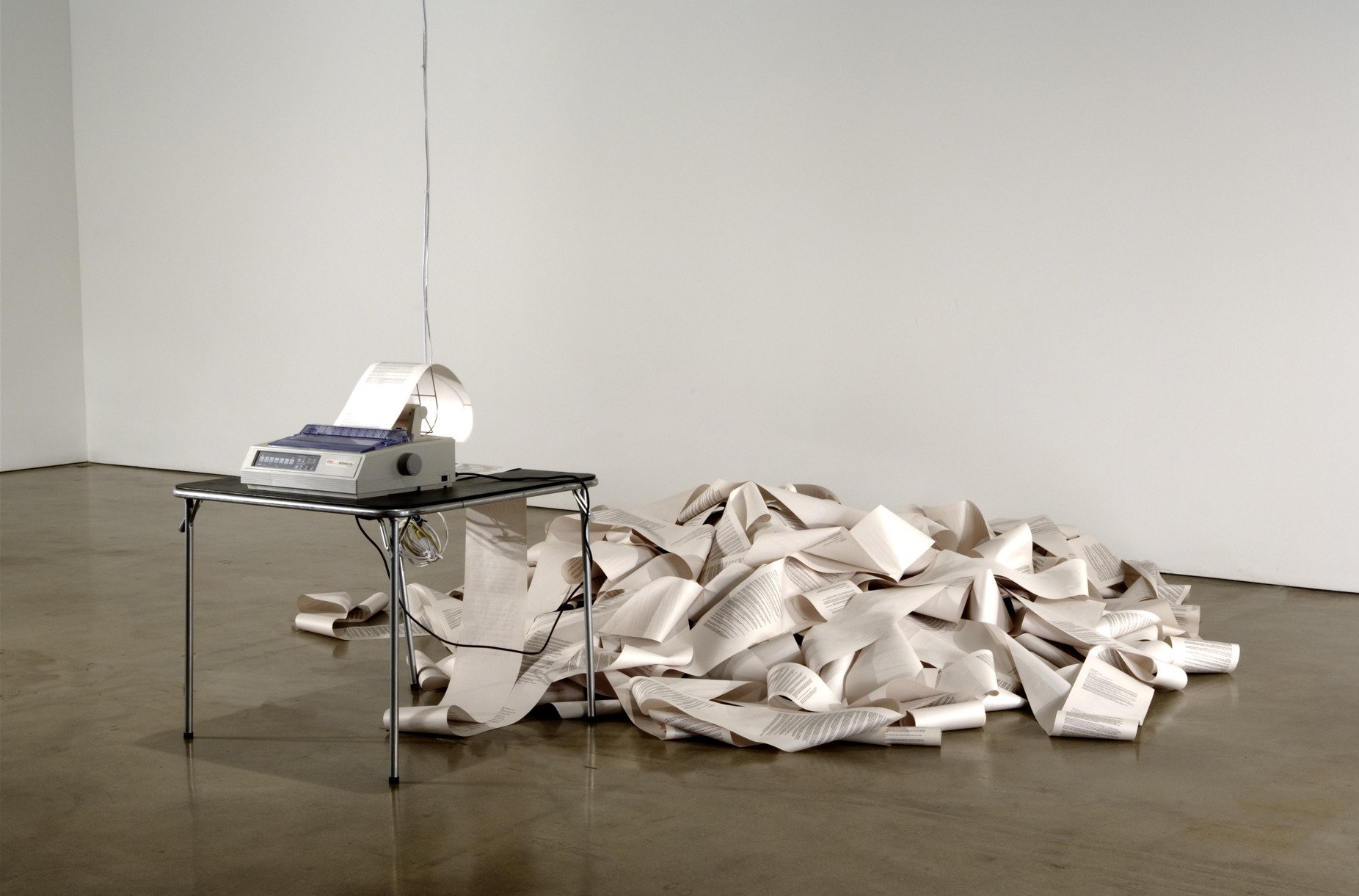
News, 1969/2008
OKI microline 590N 24 Pin Printer with newsfeed on table, roll of paper
Photo: Ellen Page Wilson
Exhibition Overview
Envisioning the world as a network of interconnected systems, Hans Haacke has developed a body of work that critically examines, through art, the institutions and structures surrounding human life. By making processes visible rather than emphasizing finished forms, inviting audience participation, and incorporating living organisms, plants, natural phenomena, and images circulating through society into his work, Haacke expanded the conventional understanding of artistic practice and anticipated many of the experimental approaches that would come to shape contemporary art.
The exhibition opens with photographs taken at documenta 2 (1959), where Haacke, then a student at the State Art Academy in Kassel, worked as an exhibition guard and art handler. Capturing not only the artworks but also visitors, staff members, installation process, and other aspects of the exhibition's operation, these early images already reveal his interest in the social and institutional systems that support and sustain art. From there, the exhibition unfolds in a broadly chronological sequence while highlighting connections among the works. It ranges from early works engaging with physical and natural phenomena to later installations that expose the structures and contradictions of capitalist systems through investigations of real estate, industry and political power.
The exhibition also includes documentation of DER BEVÖLKERUNG, an ongoing participatory artwork for the German Bundestag, as well as archival materials tracing the work’s development. Installed in 2000, this largely untended, free-growing garden is continually transformed as members of parliament contribute soil from their respective constituencies. Also featured is a new Tokyo iteration of Haacke’s Visitors' Poll series, an ongoing body of work that collects responses from museum visitors as a form of social research.
Although Haacke participated in the 1970 Tokyo Biennale, where his work was included in the landmark exhibition Between Man and Matter, his work has been shown in Japan only on a handful of occasions since then. This exhibition offers the first comprehensive presentation in Japan of the breadth and diversity of his practice, bringing together works from across more than six decades.
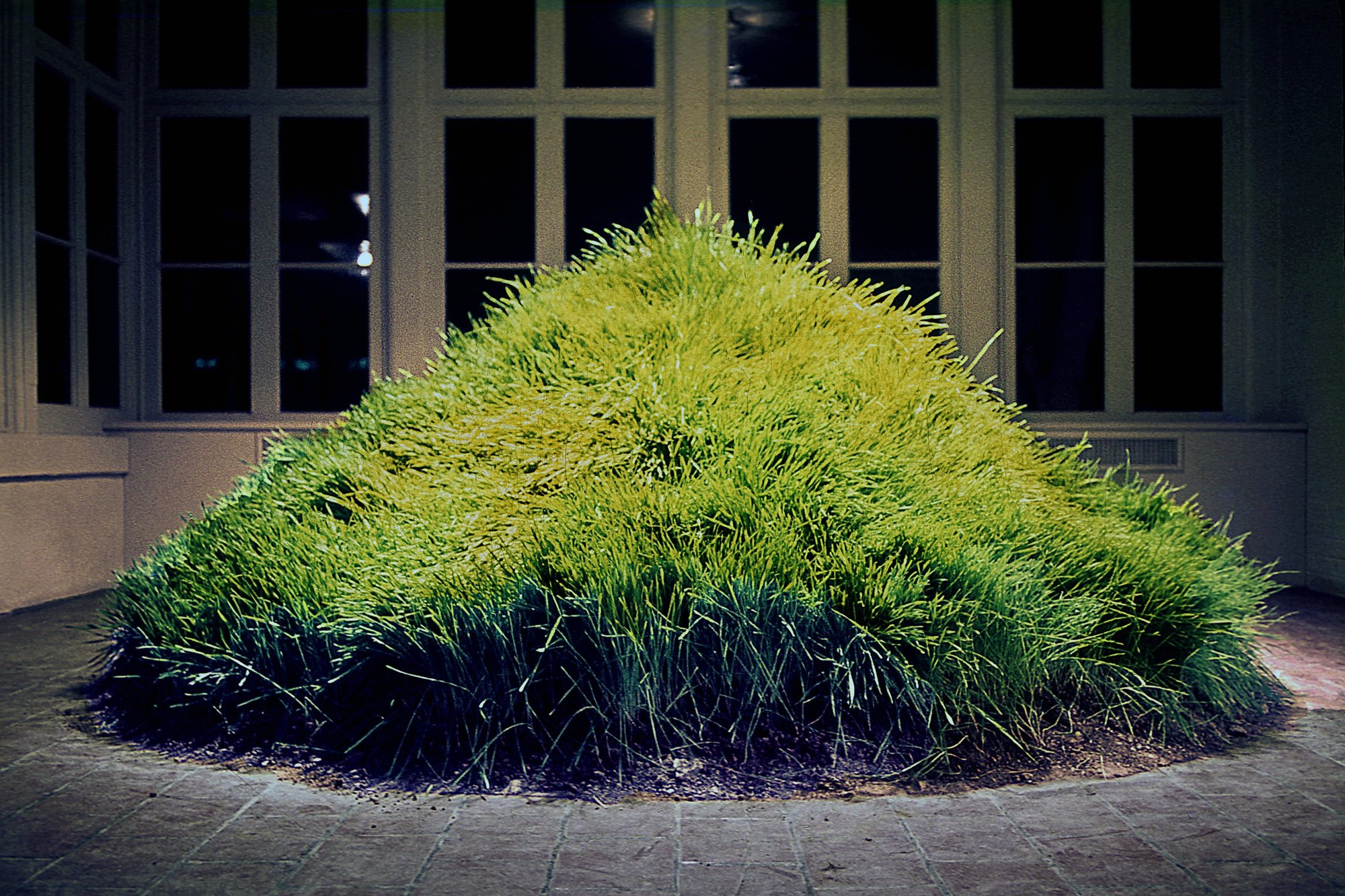
Grass Grows, 1967–69
Installation view: Earth Art, Andrew Dickson White Museum of Art, Cornell University, Ithaca, February 11–March 16, 1969.
Photo: Hans Haacke
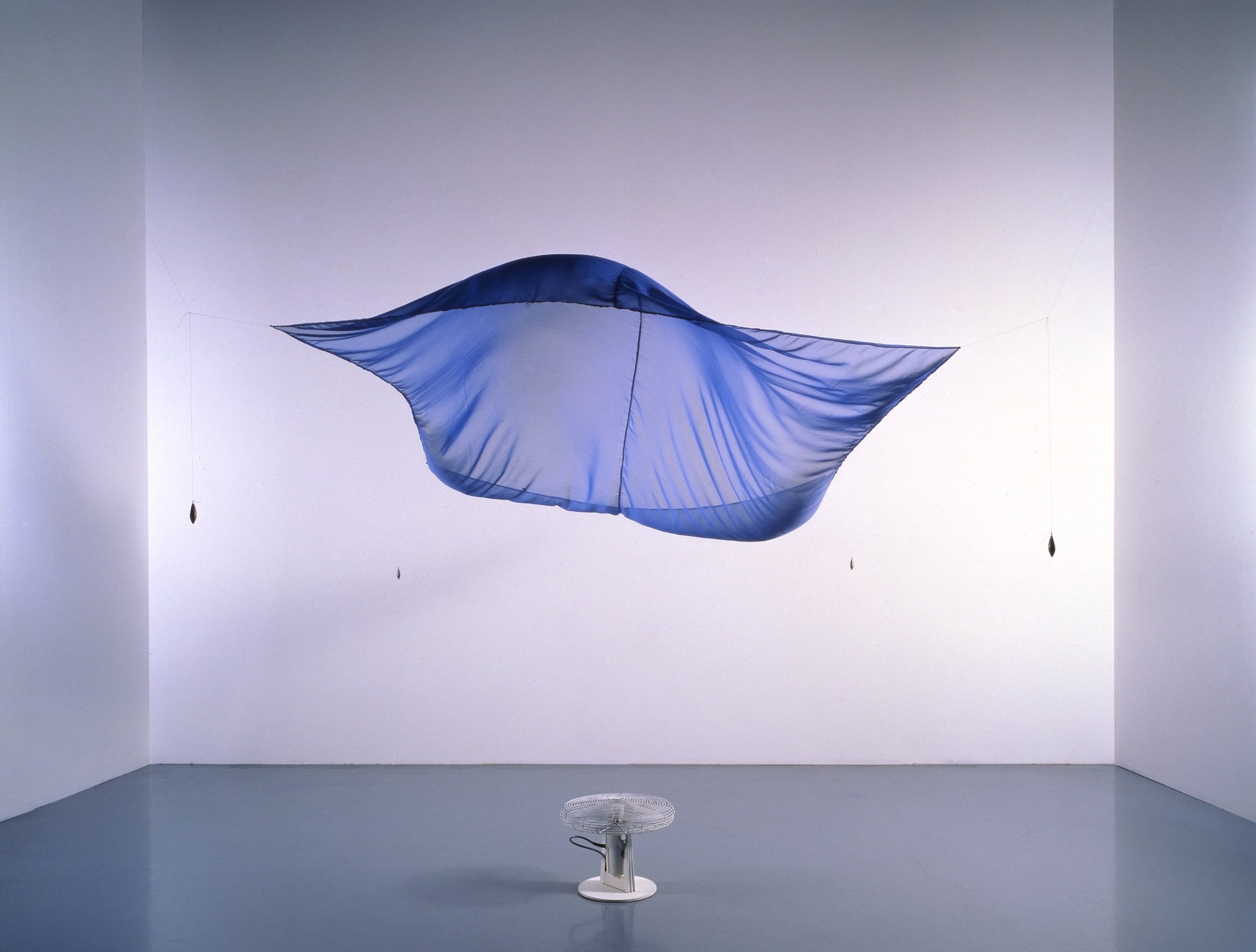
Blue Sail, 1964–1965
chiffon, oscillating fan, fishing weights and thread
Photo: Wolfgang Neeb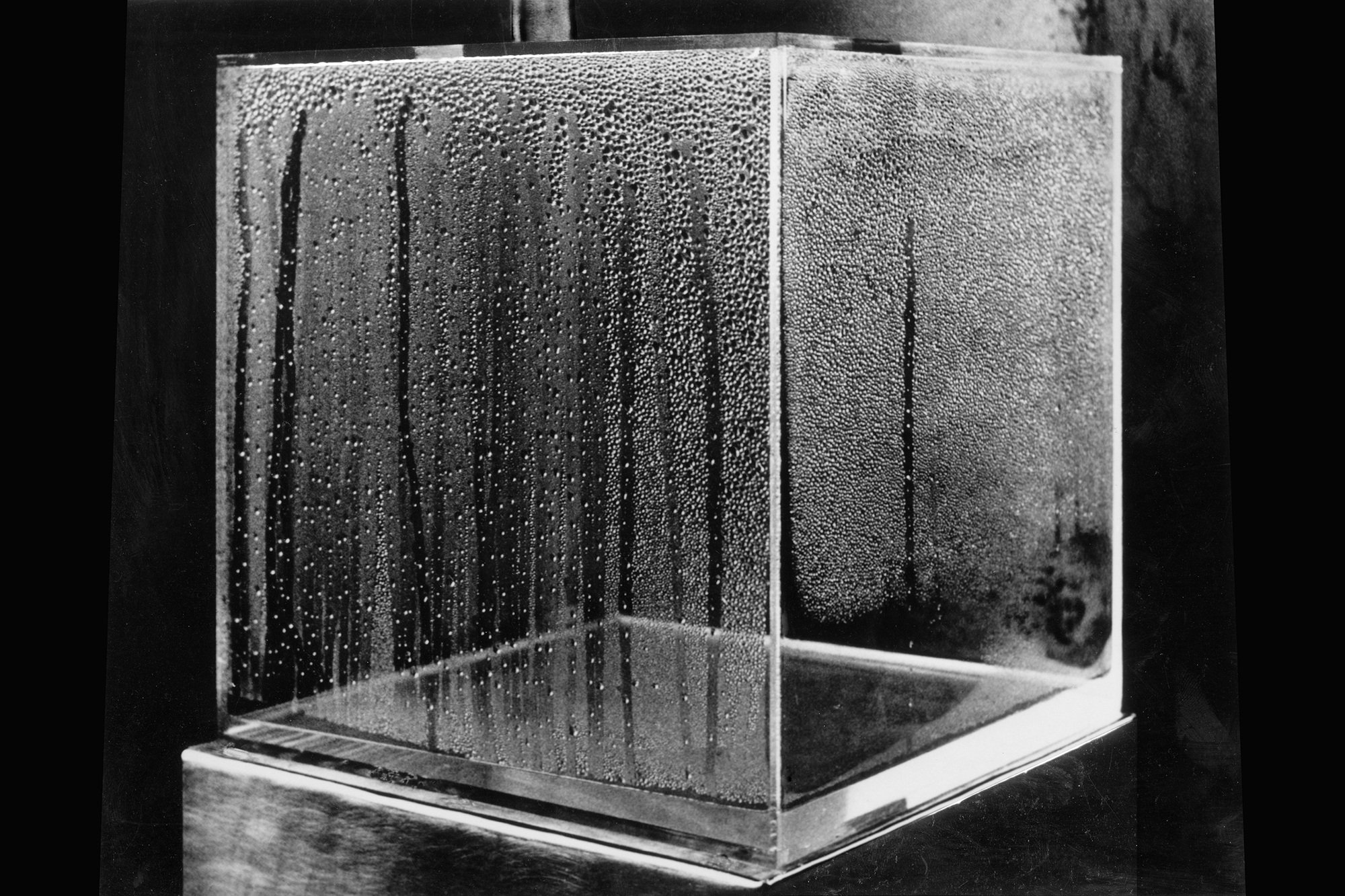
Condensation Cube, 1963–1965
clear acrylic, distilled water, climate in area of display
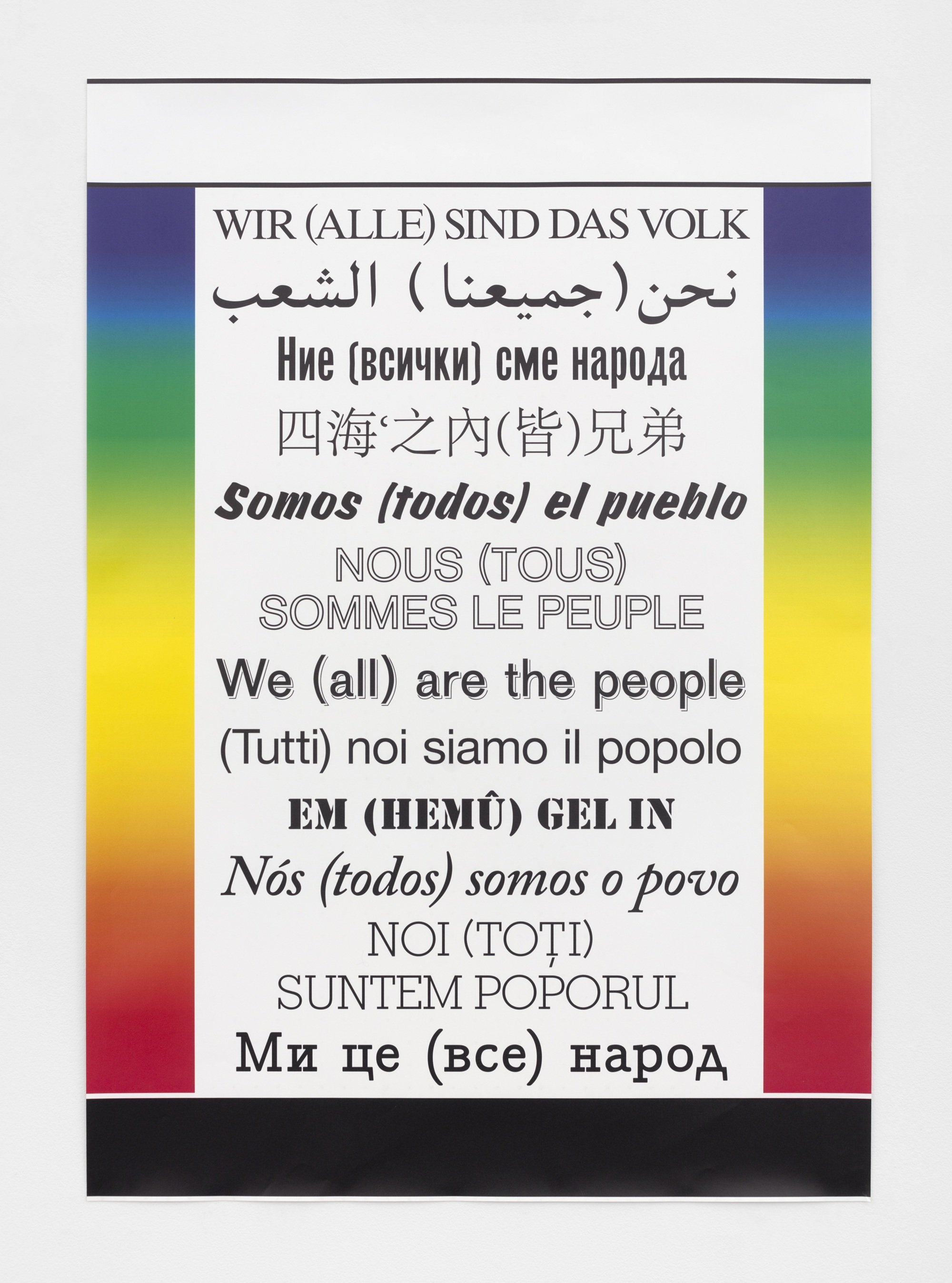
We (all) are the people, 2003/2018
site-specific work, media and dimensions variable
selection of languages dependent on site of display
Photo: Steven Probert Studio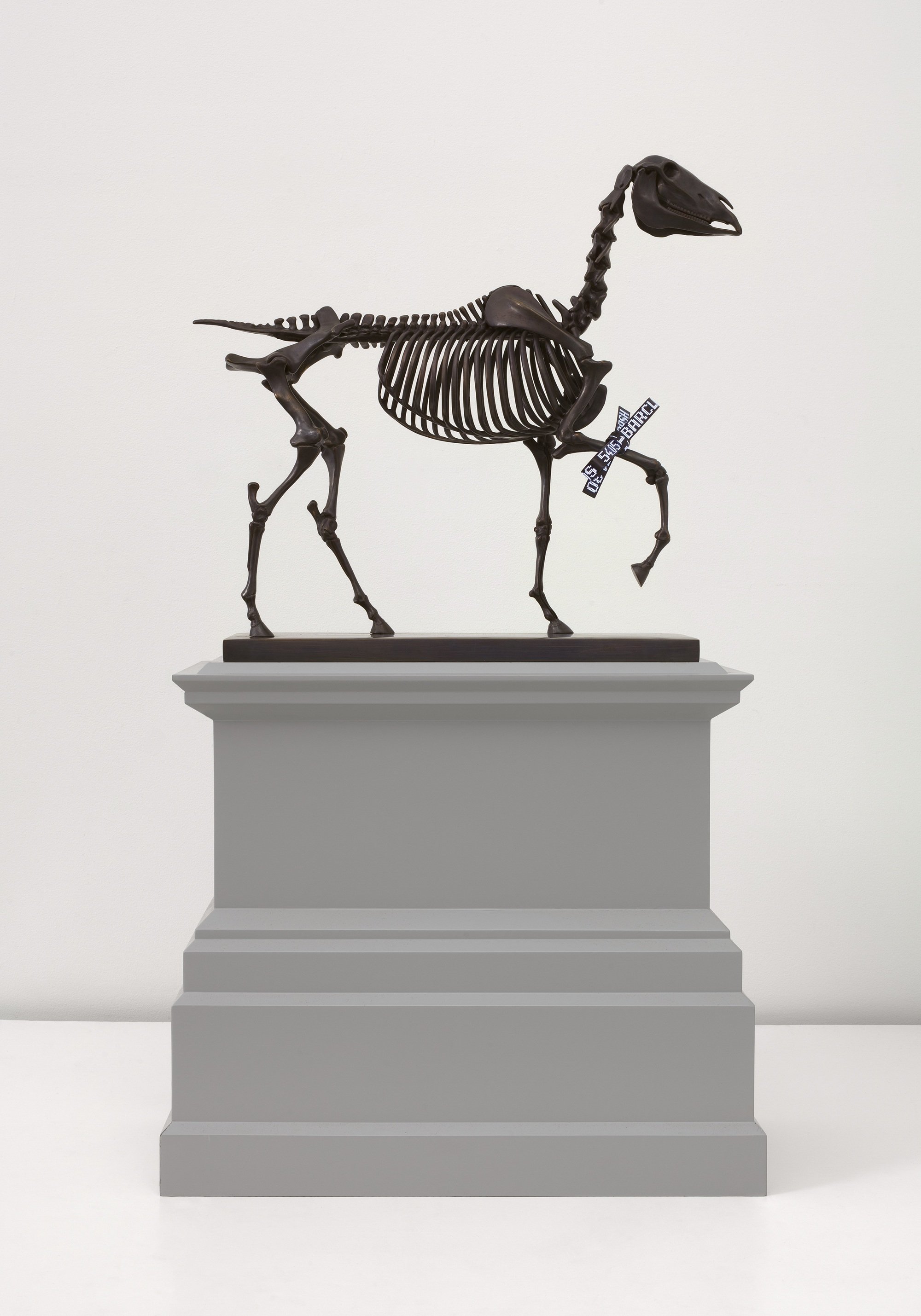
Gift Horse, Model for Fourth Plinth, Trafalgar Square, London, 2013
bronze and electroluminescent film
Photo: Steven Probert Studio
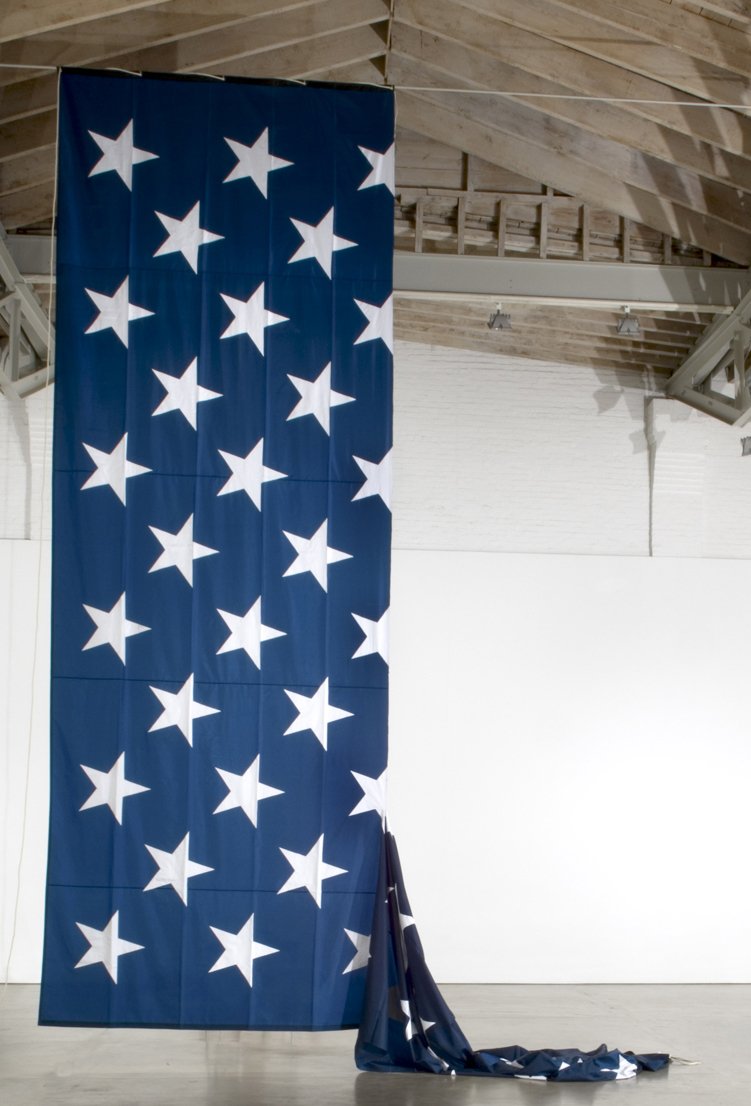
State of the Union, 2005
nylon banner, sewn by Deokallie Perfaud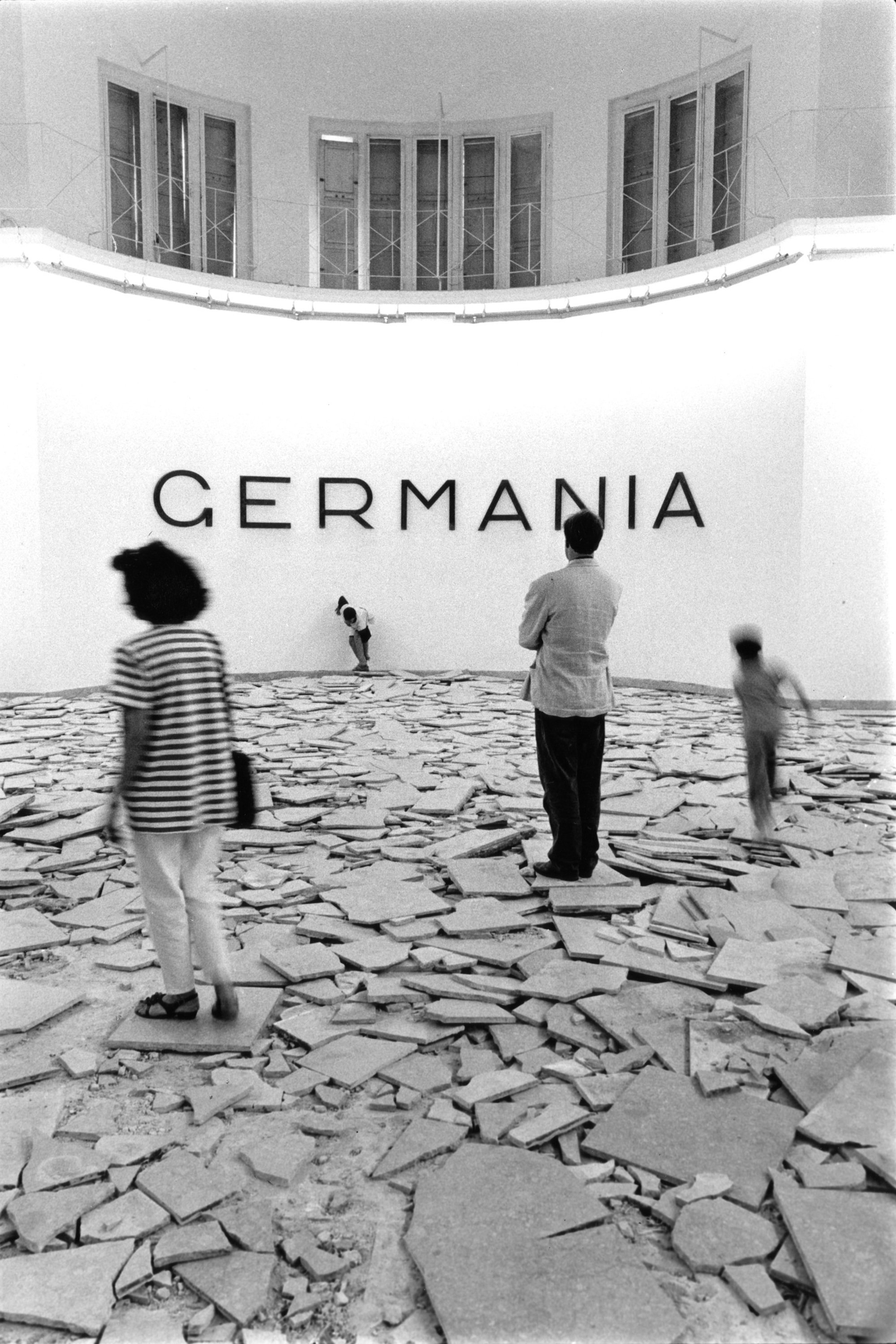
Germania, 1993
Installation view: German Pavilion, 45th Venice Biennale
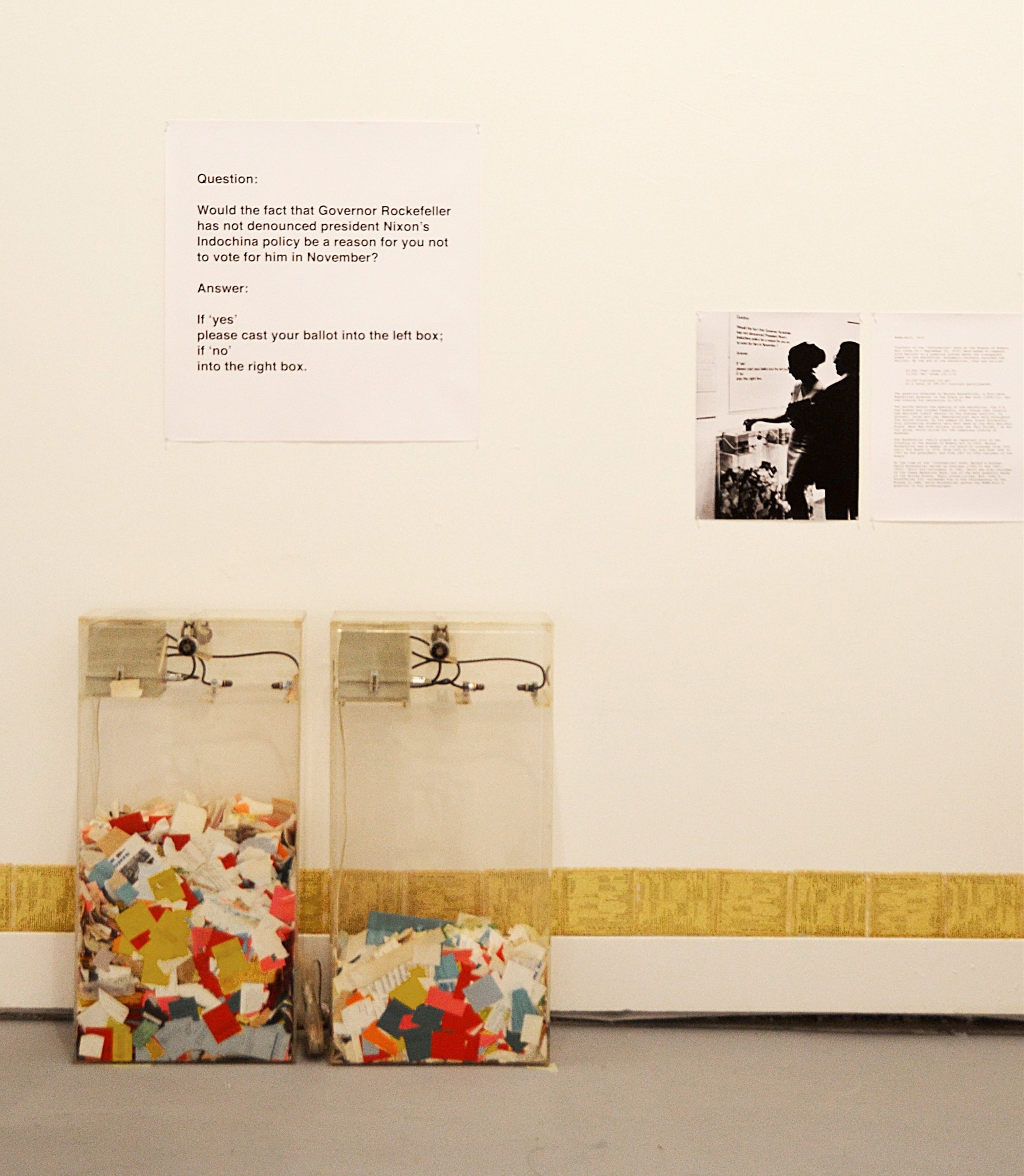
MOMA-Poll, 1970
Installation view: All the World's Future, curated by Okwui Enwezor, Central International Exhibition, Venice Biennale, Venice, Italy, May 9–November 22, 2015.
About Hans Haacke
-
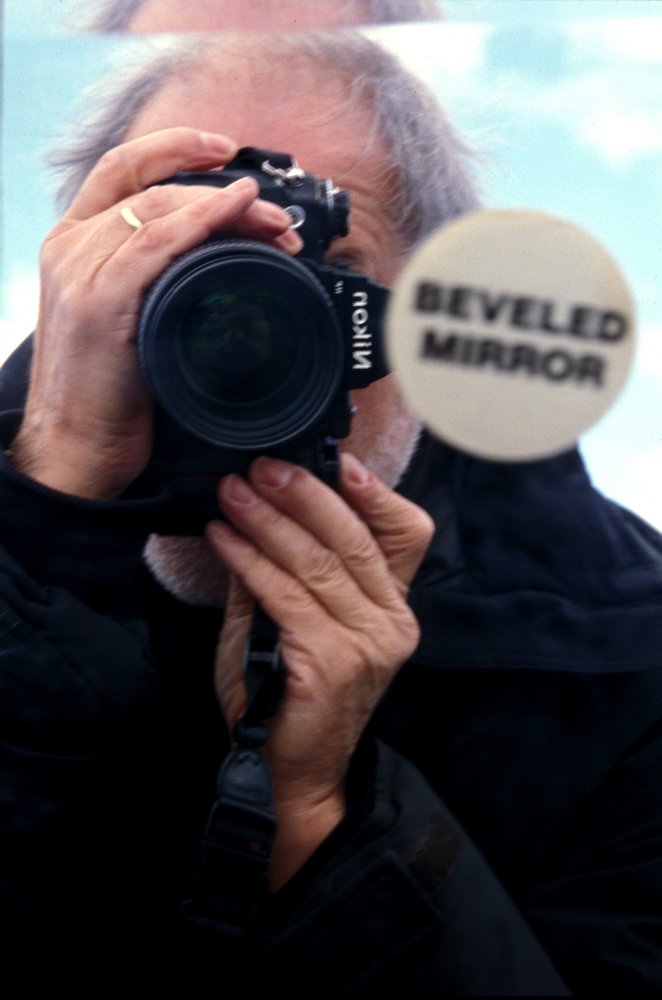
Portrait of Hans Haacke.
Born in Cologne, Germany, in 1936. Lives and works in New York. After studying at the State Art Academy in Kassel, Haacke moved to the United States in 1961. As a central figure in the development of Conceptual art in New York during the 1960s, he helped transform the movement into a critical inquiry into the complex systems in which power, economics, and culture are intertwined. His work has been presented extensively worldwide, including Germania at the German Pavilion of the 1993 Venice Biennale, which was awarded the Golden Lion, as well as major solo exhibitions at institutions such as the Centre Pompidou and the New Museum. Haacke has also had a profound influence as an educator, teaching at Cooper Union in New York from 1962 to 2002 and mentoring generations of younger artists.
All images © Hans Haacke / Artists Rights Society (ARS), New York / VG Bild-Kunst, Bonn. Courtesy the artist and Paula Cooper Gallery, New York.
Information
- Exhibition Period
February 6 – May 16, 2027
- Opening Hours
10 AM – 6 PM (Tickets available until 30 minutes before closing)
- Closed
Mondays (except Mar 22 and May 3), Mar 23, May 6
- Venue
Museum of Contemporary Art Tokyo, Exhibition Gallery 3F
- Admission
Adults: 2,300 yen
65 and over: 1,600 yen
University & College Students: 1,500 yen
High School & Junior High School Students: 920 yen
Elementary School Students & Younger: Free
*A 20% discount is available for groups of 20 people or more.
*Ticket includes admission to the MOT Collection exhibition (starting from February 20).
*All elementary school students and younger must be accompanied by a guardian.[Silver Day]
Visitors aged 65 and over receive free admission on the third Wednesday of every month upon presenting an ID at the ticket counter.
[Family Day]
Guardians of children under 18 receive half-off admission on the third weekend (Sat/Sun) of every month. Up to two visitors. Please present an ID showing Tokyo residency.
[Welcome Youth 2027]
Those aged 18 and under (born after April 2, 2008) can view all exhibitions for free between March 2 and April 4, 2027, by presenting a valid ID at the museum's ticket counter.- Organized by
Museum of Contemporary Art Tokyo operated by Tokyo Metropolitan Foundation for History and Culture
- With the Cooperation of